
Thread lifting
선릉역 강남초이스의원 피부과의
실리프팅 프로그램은
특수 의료용 실을 피부층에 삽입하여
처진 피부를 물리적으로 당기고,
콜라겐 생성을 유도해 탄력을 회복시키는
대표적인 비수술 리프팅 시술입니다.
절개나 회복 기간에 대한 부담 없이,
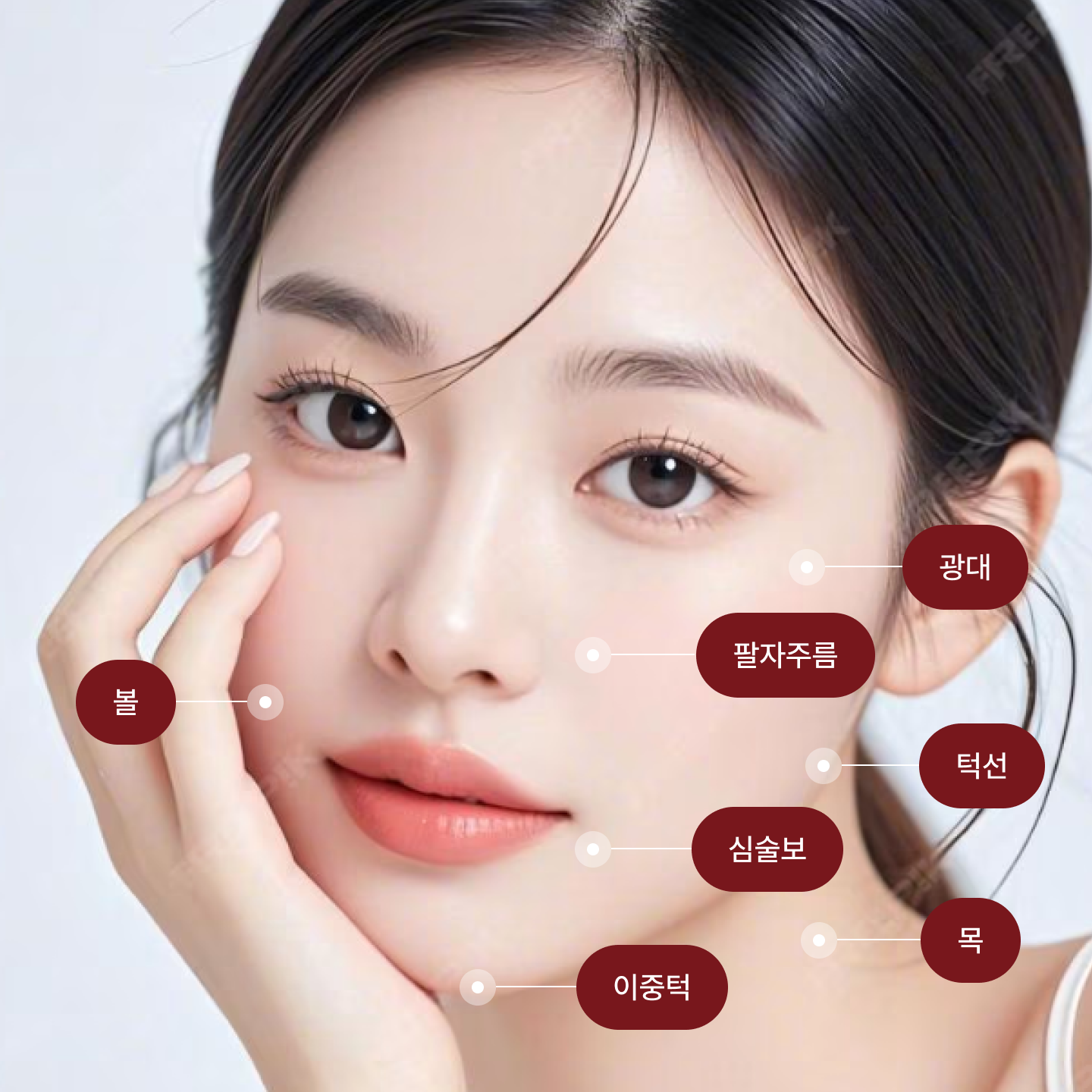
처진 볼살, 턱선, 팔자주름, 심술보 등
얼굴 전반의 리프팅 효과를
빠르게 기대할 수 있어
꾸준히 사랑받고 있는 시술입니다.
사용되는 실의 종류
(실루엣소프트, 민트, 잼버, 모노, 코실 등)는
당김의 강도, 유지 기간,
시술 부위에 따라 선택되며
개개인의 피부 상태와 리프팅 목표에 따라
맞춤형 실 조합이 이루어집니다.
또한 피부 속에 삽입된 실은
시간이 지나면서 자연스럽게 분해되며,
그 과정에서 콜라겐을 생성시켜
리프팅 효과와 함께 피부 결 개선까지
기대할 수 있습니다.
강남초이스의원 피부과는
정확한 해부학적 지식과
숙련된 테크닉을 바탕으로,
과하지 않고 자연스러운 리프팅 효과를 제공하며,
시간이 지나도 불편함 없이
만족스러운 결과를 선사해드립니다.
주요 시술 부위
볼, 팔자, 심술보, 턱선, 이중턱, 광대, 목
이런 분께 추천해요


At Gangnam Choice Clinic near Seolleung Station, our thread lifting treatments use specially designed medical threads inserted beneath the skin
to support and reposition sagging facial tissue.
Thread lifting is a minimally invasive, non-surgical treatment that can provide
an immediate lifting effect while stimulating collagen production over time.
Without surgical incisions or a lengthy recovery period, thread lifting can help improve
sagging cheeks, jowls, jawline definition, nasolabial folds, and other areas affected by facial laxity.
Different types of threads, including Silhouette Soft, MINT, Jamber, and Mono threads,
are selected according to the treatment area, degree of sagging, desired lifting effect, and individual facial anatomy.
A personalized combination of threads can be used to create a more balanced and natural-looking result.
As absorbable threads gradually dissolve, they can stimulate collagen production around the treated area,
helping support skin firmness and texture beyond the initial lifting effect.
Through careful assessment of facial anatomy and refined treatment techniques,
Gangnam Choice Clinic focuses on subtle, balanced, and natural-looking lifting results.
Major treatment areas
Cheeks, nasolabial folds, jowls, jawline, double chin, cheekbone area, neck
Recommended for those who

Have sagging facial contours or a less defined jawline
Are concerned that sagging cheeks or jowls make the face appear heavier or older
Want noticeable lifting and contouring without undergoing surgery
Want both an immediate lifting effect and long-term collagen stimulation
Are concerned about nasolabial folds, jowls, or downturned corners of the mouth
Want firmer-looking skin and a more youthful, defined facial contour
Feel that energy-based lifting treatments alone have not provided enough improvement
Want to refine the shape or definition of specific areas, such as the nose, with specialized thread techniques
강남초이스의원 피부과는,
❶
개개인의 피부 상태와 얼굴 구조를 분석하여
맞춤형 시술을 제안합니다.
❷
해부학적 구조를 기반한 개인의 처짐 부위와
피부 상태에 맞는 실을 정확히 사용합니다.
❸
수개월 후에도 유지되는
자연스러운 리프팅을 목표로 합니다.
❹
출혈·부기·불균형을 최소화하기 위해
정밀한 진단과 안전한 실을 고집합니다.
실리프팅 시술 비교
We design and build digital products people enjoy using...
Hey! Recently we were working on a project for ..We design and build digital products people enjoy using...
We are a Creative Digital Agency based in Buenos Aires, Argentina. We take pride in designing and building...
A new project is an opportunity to create something unique.We are a Creative Digital Agency based in Buenos Aires, Argentina. We take pride in designing and building...
As an interdisciplinary agile team, our production process is flexible, collaborative, and adapts to each client’s needs
We look forward to working with you on your next projectAs an interdisciplinary agile team, our production process is flexible, collaborative, and adapts to each client’s needs
We are working on the UX/UI design for a large hotel owners and hospitality management company.
Style Tiles are always a good option to show work in progress!We are working on the UX/UI design for a large hotel owners and hospitality management company.
More shots with final designs coming soon.
You can check the attachment for a full view..More shots with final designs coming soon.
we streamline the process without having to make multiple mockups.
This is a proposal to add value to a crowdfunding listing pagewe streamline the process without having to make multiple mockups.
Style tiles serve as a flexible starting point that helps us easily communicate the essence of a visual brand for the web.
Clients easily understand themStyle tiles serve as a flexible starting point that helps us easily communicate the essence of a visual brand for the web.
We are working on an exciting project for a company in the investment business. Stay tuned!
we have a lot of fun during this phase.We are working on an exciting project for a company in the investment business. Stay tuned!
We design and build digital products people enjoy using...
Hey! Recently we were working on a project for ..We design and build digital products people enjoy using...
We are a Creative Digital Agency based in Buenos Aires, Argentina. We take pride in designing and building...
A new project is an opportunity to create something unique.We are a Creative Digital Agency based in Buenos Aires, Argentina. We take pride in designing and building...
As an interdisciplinary agile team, our production process is flexible, collaborative, and adapts to each client’s needs
We look forward to working with you on your next projectAs an interdisciplinary agile team, our production process is flexible, collaborative, and adapts to each client’s needs
We are working on the UX/UI design for a large hotel owners and hospitality management company.
Style Tiles are always a good option to show work in progress!We are working on the UX/UI design for a large hotel owners and hospitality management company.
More shots with final designs coming soon.
You can check the attachment for a full view..More shots with final designs coming soon.
we streamline the process without having to make multiple mockups.
This is a proposal to add value to a crowdfunding listing pagewe streamline the process without having to make multiple mockups.
Style tiles serve as a flexible starting point that helps us easily communicate the essence of a visual brand for the web.
Clients easily understand themStyle tiles serve as a flexible starting point that helps us easily communicate the essence of a visual brand for the web.
We are working on an exciting project for a company in the investment business. Stay tuned!
we have a lot of fun during this phase.We are working on an exciting project for a company in the investment business. Stay tuned!
We design and build digital products people enjoy using...
Hey! Recently we were working on a project for ..We design and build digital products people enjoy using...
We are a Creative Digital Agency based in Buenos Aires, Argentina. We take pride in designing and building...
A new project is an opportunity to create something unique.We are a Creative Digital Agency based in Buenos Aires, Argentina. We take pride in designing and building...
As an interdisciplinary agile team, our production process is flexible, collaborative, and adapts to each client’s needs
We look forward to working with you on your next projectAs an interdisciplinary agile team, our production process is flexible, collaborative, and adapts to each client’s needs
We are working on the UX/UI design for a large hotel owners and hospitality management company.
Style Tiles are always a good option to show work in progress!We are working on the UX/UI design for a large hotel owners and hospitality management company.
시술 원리 | 시술 시간 | 시술 주기 | 회복 시간 | 리프팅 강도 | 실 종류 / 특징 | |
| 실루엣소프트 | 콘 모양 실이 피부조직을 고정해 리프팅 유도 | 약 30~40분 | 12~18개월 | 약간의 붓기 (2~3일) | ★★★★☆ | PLA 소재, 콘 타입 실 |
| 민트 | 코그(돌기) 실이 조직에 걸려 처짐 개선 | 약 20~30분 | 6~12개월 | 붓기/멍 2~5일 | ★★★★★ | PDO 소재, 강한 고정력 |
| 잼버 | 다방향 코그 실로 피부층에 넓게 고정 | 약 30분 | 6~12개월 | 붓기 2~3일 | ★★★★☆ | PDO 소재, 부드럽고 넓은 리프팅 |
| 모노 | 리프팅보다 피부 탄력/재생 중심 | 약 20분 | 3~6개월 | 붓기 거의 없음 | ★☆☆☆☆ | 단일 실, 피부결·탄력 개선 위주 |
💡 본 비교표는 시술 선택을 돕기 위한 일반적인 안내입니다.
개인의 피부 상태와 목적에 가장 적합한 솔루션은
의료진과의 정밀 상담을 통해 맞춤 설계됩니다.
Why Gangnam Choice Clinic?
❶
We carefully assess each patient’s skin condition, facial anatomy, degree of sagging, and treatment goals to create a personalized treatment plan.
❸
We prioritize natural, balanced results that remain harmonious with the patient’s facial features over time.
❷
We select the appropriate type, direction, and number of threads according to the individual facial structure and areas of concern.
❹
We use carefully selected medical threads and precise techniques to minimize unnecessary bruising, swelling, asymmetry, and discomfort.
FAQ. 자주 묻는 질문
Thread Lift Treatment Comparison
Procedure principle | Procedure time | Treatment cycle | Recovery time | Lifting strength | Thread Types / Characteristics | |
| Silhouette Soft | Cone-shaped threads fix skin tissue to induce lifting | About 30 to 40 minutes | 12~18 months | Slight swelling (2~3 days) | ★★★★☆ | PLA material, cone-type thread |
| Mint | Cog (protrusion) threads catch on the tissue to improve sagging | About 20 to 30 minutes | 6~12 months | Swelling/bruising 2~5 days | ★★★★★ | PDO material, strong fixation |
| Jamber | Widely fixed to the skin layer with multi-directional cog threads | About 30 minutes | 6~12 months | Swelling for 2-3 days | ★★★★☆ | PDO material, soft and wide lifting |
| Mono | Focus on skin elasticity/regeneration rather than lifting | About 20 minutes | 3~6 months | Almost no swelling | ★☆☆☆☆ | Single thread, focused on improving skin texture and elasticity |
💡
This comparison chart is a general guide to assist in selecting a procedure.
The solution most suitable for your individual skin condition and goals is
It is custom-designed through precise consultation with medical staff.
FAQ
Thread lifting may be a good option for patients with mild to moderate facial sagging who want a more defined facial contour without undergoing surgery.
It is commonly considered for patients who notice early changes in the cheeks, jowls, jawline, nasolabial fold area, or lower face.
You may be a suitable candidate for thread lifting if you:
Thread lifting may not be the best option for every type of facial sagging.
Patients with significant excess skin, advanced tissue laxity, marked volume loss, or heavy lower-face tissue may benefit more from another treatment or a combination approach.
In some cases, energy-based lifting, fillers, biostimulators, fat reduction treatments, or surgical lifting may be more appropriate depending on the underlying cause.
The most appropriate treatment depends on facial anatomy, skin elasticity, tissue thickness, fat distribution, degree of sagging, and individual aesthetic goals.
At Gangnam Choice Clinic, our medical team evaluates these factors before recommending a personalized thread lift treatment or combination treatment plan.
Yes. Thread lifting can often be combined with other aesthetic treatments because facial aging usually involves multiple factors, including tissue sagging, muscle activity, volume loss, and changes in skin quality.
Yes. Botulinum toxin can be used to reduce excessive muscle activity or expression lines, while a thread lift can provide mechanical support for sagging tissue.
The two treatments address different aspects of facial aging and may be combined when appropriate.
Yes. Fillers or collagen-stimulating injectables may be considered when facial volume loss or structural support also needs to be addressed.
However, the appropriate treatment sequence and injection areas should be planned carefully to avoid unnecessary pressure or distortion of newly placed threads.
Energy-based treatments such as Ultherapy, Thermage, or other lifting procedures may also be incorporated into an overall treatment plan.
The appropriate sequence and interval depend on the treatment area, energy device, thread placement, skin condition, and individual goals.
At Gangnam Choice Clinic, treatment planning is based on facial anatomy, degree of sagging, volume distribution, skin quality, and individual aesthetic goals.
A personalized combination may provide a more balanced result than relying on a single treatment alone.
There are several types of thread lifting threads, and each has different structural characteristics, lifting strength, flexibility, and treatment goals.
At Gangnam Choice Clinic, the type and combination of threads are selected according to facial anatomy, degree of sagging, skin thickness, and desired result.
MINT is an absorbable cog thread designed to engage facial tissue and provide mechanical lifting and fixation.
It may be used when relatively strong support and repositioning of sagging tissue are needed.
Silhouette Soft uses an absorbable suspension system with cone-shaped structures that help support and reposition facial tissue.
The appropriate use depends on facial anatomy and treatment goals.
Jamber threads are designed to provide flexible tissue support and may be used for selected areas requiring volume repositioning or contour improvement.
Mono threads generally provide less mechanical lifting than cog or suspension threads.
They are more commonly used to stimulate collagen and improve skin firmness, texture, and overall tissue quality.
There is no single thread that is best for every patient.
A customized combination may be recommended based on the location of sagging, skin elasticity, facial structure, and the amount of lifting required.
Yes. It is possible to temporarily feel the threads or notice mild irregularities after thread lifting, especially during the early healing period.
Temporary tightness, pulling, dimpling, puckering, or a slightly uneven texture may occur as the threads support and reposition the tissue.
In most cases, mild thread palpability or temporary unevenness is not a cause for concern.
The medical threads used for thread lifting are absorbable and gradually break down naturally within the body over time. As swelling decreases and the surrounding tissue settles, the sensation of the threads usually becomes less noticeable.
Therefore, if the thread is only mildly palpable and there is no significant pain, redness, discharge, or obvious protrusion, it is usually appropriate to allow time for the area to heal naturally.
Mild dimpling or temporary skin unevenness can occur immediately after a thread lift. This is often related to tissue repositioning and swelling and usually improves gradually as the treated area settles.
The degree and duration may vary depending on the type of thread, treatment technique, treatment area, and individual skin characteristics.
If a thread is clearly protruding through the skin, or if you develop increasing pain, significant redness, swelling, discharge, skin color changes, or other unusual symptoms, please contact the clinic for evaluation.
Do not pull, cut, massage, or manipulate a protruding thread at home. Our medical team can assess the area and provide appropriate treatment if necessary.
Most patients can return to light daily activities soon after thread lifting, but swelling, bruising, tenderness, tightness, or temporary asymmetry may occur during the early recovery period.
Visible swelling and bruising often improve gradually over several days, although some symptoms may persist longer depending on the treatment area and number of threads used.
During the early recovery period, patients are generally advised to avoid excessive pressure or movement around the treated area.
If you experience severe or increasing pain, marked redness or swelling, fever, skin color changes, discharge, or exposed thread material, please contact the clinic promptly for evaluation.
Some discomfort can occur during thread lifting, but local anesthesia is typically used to reduce pain during the procedure.
Patients may feel pressure, pulling, or tension as the threads are placed beneath the skin.
Depending on the treatment area and planned thread technique, topical anesthetic cream and local anesthetic injections may be used.
The appropriate anesthesia method is selected according to the number of threads, treatment area, and individual sensitivity.
Yes. Temporary tightness, pulling, tenderness, or an unfamiliar sensation can occur after a thread lift.
These sensations generally improve gradually as the tissue settles and the treated area heals.
Thread lifting can be used to improve selected areas of facial sagging and loss of definition.
Common thread lift treatment areas include:
Not necessarily. The effectiveness of a thread lift depends on the cause and severity of sagging.
Patients with significant excess skin or advanced tissue laxity may require a different approach or a combination of treatments.
An assessment of facial anatomy, fat distribution, skin elasticity, and tissue descent is therefore important before treatment.
The duration of thread lift results varies depending on the type and number of threads used, treatment area, degree of sagging, skin condition, and individual tissue characteristics.
In general, visible improvement may last approximately 6 to 18 months, although results vary considerably between patients and thread types.
Several factors can influence how long thread lifting results remain noticeable:
Absorbable threads gradually break down over time. However, collagen stimulation around the treated area may continue to contribute to skin firmness even as the threads are absorbed.
The timing of repeat thread lifting treatment should therefore be determined according to individual changes rather than a fixed schedule.
Thread lifting is a minimally invasive treatment that uses absorbable medical threads to support and reposition sagging facial tissue.
Depending on the type of thread used, the threads can provide mechanical support to areas such as the cheeks, jowls, and jawline while also stimulating collagen production as they gradually dissolve.
Specialized lifting threads are placed beneath the skin in carefully planned directions to support loose tissue and improve facial contours.
The goal of a thread lift is not to create an excessively tight appearance, but to achieve a more defined and naturally lifted facial contour.
Yes. As absorbable threads remain within the tissue, they can stimulate a healing response and collagen production around the treated area.
This may contribute to gradual improvements in skin firmness and texture in addition to the immediate mechanical lifting effect.


